

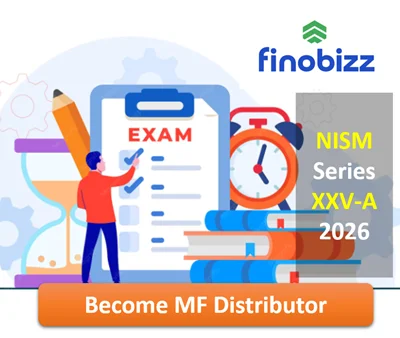
NISM Series XXV-A is one of the most important staffing changes for the Research Analyst industry in 2026.
It was created for Persons Associated with Research Services (PARS) who interact with clients or support a Research Analyst business but perform sales and other non-core services rather than the core research function.
Before this lighter module, firms had a stronger incentive to put a research-oriented certification burden on a wider group of staff.
SEBI’s March 2026 relaxation recognises that a relationship manager who explains a subscription and manages a client relationship does not perform the same job as an analyst preparing a valuation model or publishing a research recommendation.
Quick answer
NISM Series XXV-A is for PARS doing sales and other non-core research-service functions.
The current exam is online/remotely proctored, 50 questions, 60 minutes, 50% pass, no negative marking, ₹1,500 plus applicable/payment charges as listed by NISM, and the certificate is valid for 3 years.
What this Guide Covers
- What XXV-A is
- Why SEBI introduced a lighter module
- Who is a PARS
- Core vs non-core research role
- Who should take XXV-A
- Exam fee and structure
- Remote-proctored process
- Curriculum and weightages
- Study plan
- PAN and certificate validity
- Renewal
- XXV-A vs Series XV
- Employer role-mapping
- FAQs
What Is NISM Series XXV-A?
NISM launched Series XXV-A effective 10 February 2026.
It establishes a minimum knowledge benchmark for persons associated with research services under the SEBI Research Analysts framework, but only for sales and other non-core services.
Who Is a Person Associated with Research Services?
The regulatory definition is broader than the job title “sales executive”.
A Research Analyst entity can include relationship managers, subscription-support staff, business-development staff, and other employees connected to research services.
The key compliance question is the function actually performed.
Core Research vs Sales/Non-Core
| Role Activity | Likely Certification Direction |
| Preparing/publishing research reports | Core research – Series XV framework |
| Building valuation models used in published research | Core research – Series XV framework |
| Making the research recommendation/target call | Core research – Series XV framework |
| Explaining subscription plans and onboarding clients | Sales/non-core – XXV-A framework |
| Client relationship management without preparing advice/research | Sales/non-core – XXV-A framework |
| Administrative/technology support with no research role | Analyse actual PARS definition/role; certification may differ |
Do not choose XXV-A simply because it is easier. If the employee is actually involved in the preparation or publication of research analysis, the lighter sales/non-core module should not be used to disguise a core research role.
Exam Structure 2026
| Particular | Current XXV-A |
| Launch | 10 February 2026 |
| Fee | ₹1,500; NISM live FAQ/current page should be checked for taxes/payment-gateway treatment |
| Questions | 50 MCQs × 1 mark |
| Maximum marks | 50 |
| Duration | 60 minutes |
| Passing score | 25 marks / 50% |
| Negative marking | None |
| Mode | Internet-based, remotely proctored |
| Study content | Video/e-learning content made available by NISM |
| Validity | 3 years |
| Renewal | Reappear and pass before expiry |
| PAN | Required/updated for certificate issuance |
XXV-A Curriculum and Weightage
| Session | Topic | Marks |
| 1 | Introduction to Research Analysis Profession and Securities Markets | 5 |
| 2 | Fundamentals of Research, Market Terminologies and Market Analysis | 5 |
| 3 | Risk and Return Fundamentals | 7 |
| 4 | Research Reporting, Ethics and Regulatory Environment | 8 |
| 5 | Client Interaction and Relationship Skills | 15 |
| 6 | Professional Efficiency, Development and Tools | 10 |
| Total | 50 |
The weightage shows what the exam is trying to accomplish.
It does not turn sales staff into analysts; instead, it provides enough market, ethics, client-interaction, and research-service context for a non-core employee to operate responsibly in a Research Analyst business.
How to Register
- Create/login to the NISM certification portal.
- Select Series XXV-A.
- Complete profile and PAN details accurately.
- Choose the available remote-proctored exam workflow/date as shown by the portal.
- Pay the current exam fee.
- Complete the prescribed study content and exam instructions.
- Appear for the online proctored assessment.
The broader advertising rules for financial agents are relevant when certified sales personnel promote research subscriptions online.
How to Prepare
Because there is no negative marking and the pass mark is 50%, the exam is less calculation-heavy than Series XV.
The correct preparation approach is not to over-study equity valuation; focus on role boundaries, research-service basics, ethics, regulation, investor protection and client handling.
| Study Priority | Topic | Reason |
| High | Client interaction and relationship skills | 15/50 marks |
| High | Professional efficiency/tools | 10/50 marks |
| High | Research reporting, ethics and regulation | 8/50 marks |
| Medium | Risk and return | 7/50 marks |
| Foundation | Research profession/market basics | 10 marks combined across first two sessions |
5-Day Study Plan
| Day | Focus |
| 1 | Sessions 1–2: research profession, securities markets, basic research and terminology |
| 2 | Session 3: risk and return; revise practical investor-risk concepts |
| 3 | Session 4: research reports, ethics, conflicts and regulatory environment |
| 4 | Session 5: client interaction, communication, relationship management |
| 5 | Session 6 + full revision; complete mock-style questions and remote-proctor checks |
Certificate Validity and Renewal
The certificate is valid for three years from the exam date. NISM’s current FAQ says renewal requires passing XXV-A again before the existing certificate expires.
Research Analyst entities should maintain a certification register so staff do not accidentally continue regulated functions after certification lapses.
XXV-A vs NISM Series XV
| Feature | Series XXV-A | Series XV |
| Role | Sales and other non-core research services | Core Research Analyst/research function |
| Duration | 60 minutes | 120 minutes |
| Marks | 50 | 100 |
| Pass | 50% | 60% |
| Negative marking | None | 25% |
| Mode | Remote/internet based | Current NISM Series XV exam process |
| Purpose | Role-appropriate lighter benchmark | Full research competency benchmark |
For the detailed syllabus and core-research certification route, read the NISM Series XV Research Analyst exam guide.
Employer Role-Mapping Checklist
- Write a job description before choosing the certificate.
- Identify whether the employee can influence the research recommendation.
- Identify whether the employee prepares data/analysis used in the report.
- Identify whether the employee only explains, sells or services the research subscription.
- Restrict system access consistent with the role.
- Record the certification number and expiry date.
- Review role changes before transferring a non-core employee into research.
Anyone considering an independent research operation should also review the SEBI Research Analyst business registration guide.
FAQs
Is XXV-A for a Research Analyst?
It is designed for persons associated with research services performing sales and other non-core services, not as a substitute for the core Series XV requirement.
Is there negative marking?
No.
What is the current fee?
NISM’s live current FAQ/page lists ₹1,500; check the payment screen for applicable charges/taxes.
Can a relationship manager take XXV-A?
If the person’s function is genuinely sales/non-core within the PARS framework, XXV-A is designed for that type of role.
How is it renewed?
Reappear and pass XXV-A before the existing certificate expires.
Final Takeaway
XXV-A makes Research Analyst staffing more proportionate.
The value isn’t that firms can put less-qualified people into research; it’s that sales and client-service staff can meet a benchmark suited to their function while the core research team continues to meet the more rigorous research certification requirements.